We're hiring! Visit our careers page to learn more!




Setting a goal is simple enough. Just think about something you want to do, say you’re going to do it, and then do it. However, we know it’s not that easy. Between busy seasons, difficult times, low motivation, hard-to-control energy levels, and so much more, creating and maintaining goals is often very difficult.
Goals are best when they support your values, interests, and overall health. In counseling, goals are helpful for having productive sessions and pushing you toward the change you want to see.
In this article, we’ll talk about everything you need to know about building and maintaining goals, including:
Goals give structure to growth. Without them, we’d be floundering. We’d only ever be improving when the stars align, and let's be honest, that’s not often.
In mental health, goals translate abstract hopes and dreams into a tangible target that people can actively work toward.
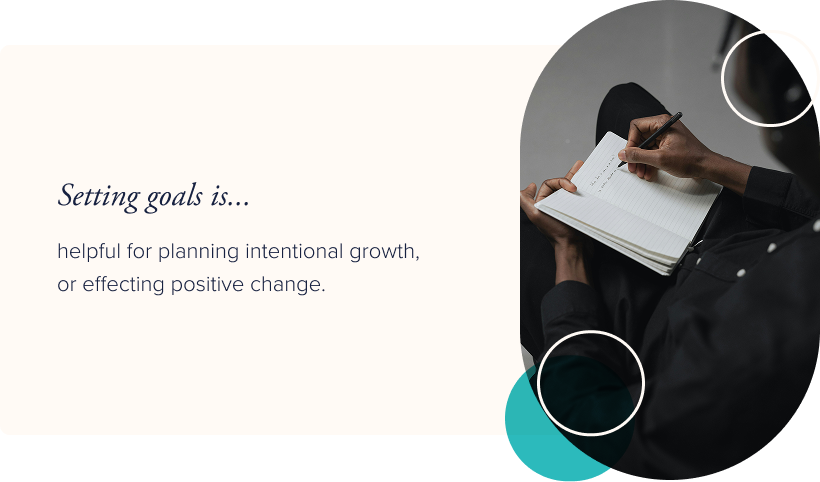
When you give yourself a goal to work toward, you’re more likely to start moving. You might want to read more often, but until you set a goal of reading x amount of minutes a week, you likely won’t start reading more.
Seeing a goal all the way through is a tough endeavour. Just look at the roughly 91% of Americans who fail their New Year's Resolution every year.
When you set good and intentional goals, you’ll be more motivated to see them through, even when they’re hard to maintain.
Goals narrow your attention to what matters most. Rather than getting caught up in the myriad of other things you want to improve upon, you get to focus on that one thing for a while.
Working toward a clear task will keep you engaged, and you’ll likely enjoy the “work” more. Progress feels meaningful when it’s connected to a purpose, not just a checklist.
Achieving even smaller goals creates momentum toward bigger and more ambitious goals. This builds momentum and builds the likelihood of completing more.
Many people fail to achieve their goals, not because they’re lazy or lack discipline, but because they set bad goals. Bad goals are vague, unrealistic, and often disconnected from personal values. They lack meaning and are difficult to make actionable.
This sounds too simple, but it’s true.
Physically writing your goals down and displaying them makes them feel more real, physical, and tangible. Seeing your goals regularly can interrupt old habits that are stopping you from pursuing goals. It also keeps goals from fading into the background when life gets busy.
Visual reminders can also help reduce excuses, reinforce commitment, and support personal accountability. Whether it’s a sticky note, journal page, or phone lock screen, keeping goals in front of you matters.
When you want to set good goals, just remember SMART goals. SMART goals are a widely used, research-supported framework for effective goal setting. SMART stands for:
Goals should be clear, well-defined, and focused on a specific action. The more precise the goal, the easier it is to act on it.
Include criteria that allow you to track progress. Measurement doesn’t need to be rigid, but it will keep you on track and help you notice when things change and reflect on how far you’ve gotten.
Goals should be realistic given your current circumstances, resources, energy, and time. Stretching yourself is helpful and often necessary to achieve what you want, but consider whether your goal is actually achievable.
The goal should connect to your personal values, mental health, and physical needs, or long-term growth goals. Relevance increases motivation and emotional investment.
Timelines create structure and prevent goals from being postponed indefinitely. Deadlines can be flexible, but they help provide momentum.
SMART goals are especially effective in counseling and behavior-changing efforts because they turn vague ideas into actionable and measurable behaviors. They help people get focused and apply changes to real life.

Large goals can feel intimidating. Breaking them into smaller, achievable steps will help you feel less overwhelmed and build confidence.
Instead of focusing only on the end result, identify short-term actions that support the larger goal. Each completed step reinforces progress and creates momentum.
Mini goals allow you to start now, rather than waiting for the “right time”. They shift the focus from perfection to consistency.
Another helpful way to clarify goals is by answering the Six W’s:
This approach adds depth and intention, ensuring goals are grounded in a real-world context.
Tracking progress makes change visible.
You might use a journal, app, spreadsheet, planner, or anything that helps you notice patterns and improvements. This process isn’t about judgment, but it’s about raising awareness of patterns and efforts.
Seeing progress over time reinforces effort and helps identify what’s working and what needs adjustment.
The reward system is a powerful tool for achieving goals. Pairing effort with meaningful incentives can strengthen follow-through and make the process more enjoyable. Incentives for achieving goals include:
Incentives don’t need to be extravagant. Small intentional rewards reinforce positive behavior and acknowledge effort, not just outcomes. Make them specific to your achievement by using the time to reflect on your success.
Surround yourself with reminders of what you’re working toward. Inspiration fuels motivation, especially when it’s difficult to maintain goals.
You can find inspiration almost anywhere, and there likely exist libraries worth of books, movies, podcasts, and educational resources that relate to your goals.
Whether you want to get into cooking and eating healthier, biking, journaling, decorating your home, or building mindfulness, there is media you can ingest that will keep you motivated.
Goal setting is a central part of effective therapy. It helps answer important questions like “Is this even working?” When you set goals, you give yourself a way to measure your progress.
Related Article: How to Know if Therapy is Working
Therapy often begins with exploration.
Your reason for attending therapy becomes the driving force behind the counselor's approach and the work you put in. Even if you don’t have clear answers to what you want, sharing how you feel and why you reached out will give your counselor valuable insight.
A skilled counselor will ask thoughtful questions to help you uncover your hopes and dreams for attending counseling.
As therapy progresses, self-understanding deepens. Conversations with your counselor help refine broader desires and give you a clearer picture of your goals.
This process will help you set achievable goals like:
These kinds of goals frame treatment, guide therapeutic intervention, and give meaning to the work you’re doing.
Progress can be subtle, which is why reflection matters.
Many therapy modalities include built-in progress tracking, allowing moments to look back and notice change over time. You can also track progress independently:
Progress often isn’t linear; it’s real and deserves recognition.
Goal setting isn’t about pressure or perfection. In counseling, it’s about aligning effort with meaning, building confidence, creating a path forward, and celebrating the little wins toward the life you want to live.
When goals are rooted in meaning and values, they become tools for healing.
At Inner Balance Counseling, we help clients achieve their goals by building action plans and tailoring their care to their needs.
If you’re looking for a place you can achieve your mental health goals, reach out to Inner Balance Counseling.
Sign up with your email address to receive news and updates.

%201.svg)
With both in-person and online therapy options, we want to make therapy accessible and inclusive.
Your message will be sent directly to the therapist or counselor via email. Email is not fully secure during transit, so please avoid sharing sensitive information such as medical or insurance details. Your messages are also stored securely in our protected message center, accessible only to the professional you contact.
By using this form, you agree to our Privacy Policy and Terms, and consent to your message being sent and stored as described.
If this is an emergency do not use this form. Call 911 or your nearest hospital.
This site is protected by reCAPTCHA and the Google Privacy Policy and Terms of Service apply.