We're hiring! Visit our careers page to learn more!



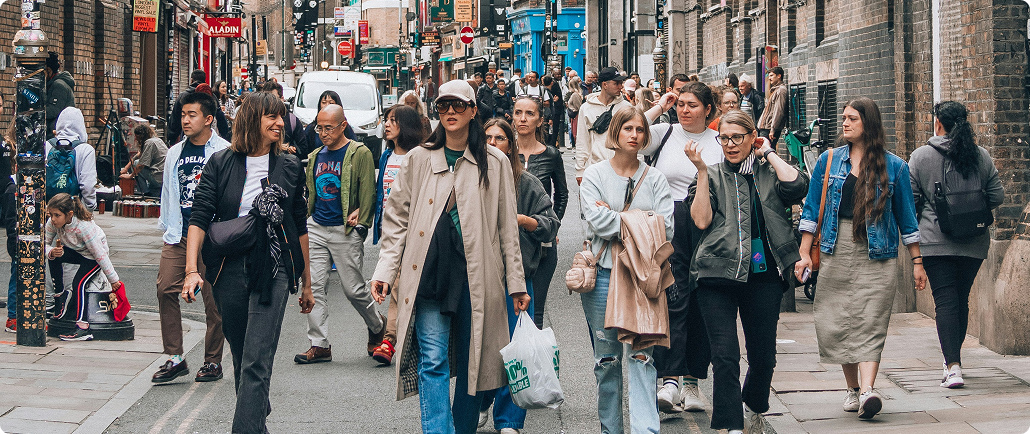
The people who grew up and lived during the early 20th century are often referred to as the “Lost Generation”. They earned this title after being forced to pave their own path through a uniquely difficult and rapidly evolving era, one characterized by financial hardships, political turmoil, and widespread anxiety about what the future would hold.
Fast forward to today, and you’ll find that most millennials are facing the same struggles that the Lost Generation faced in their time. While it’s true that every generation experiences similar challenges, the distinct parallels between the modern era and the early 20th century has led many to deem millennials as the new Lost Generation.
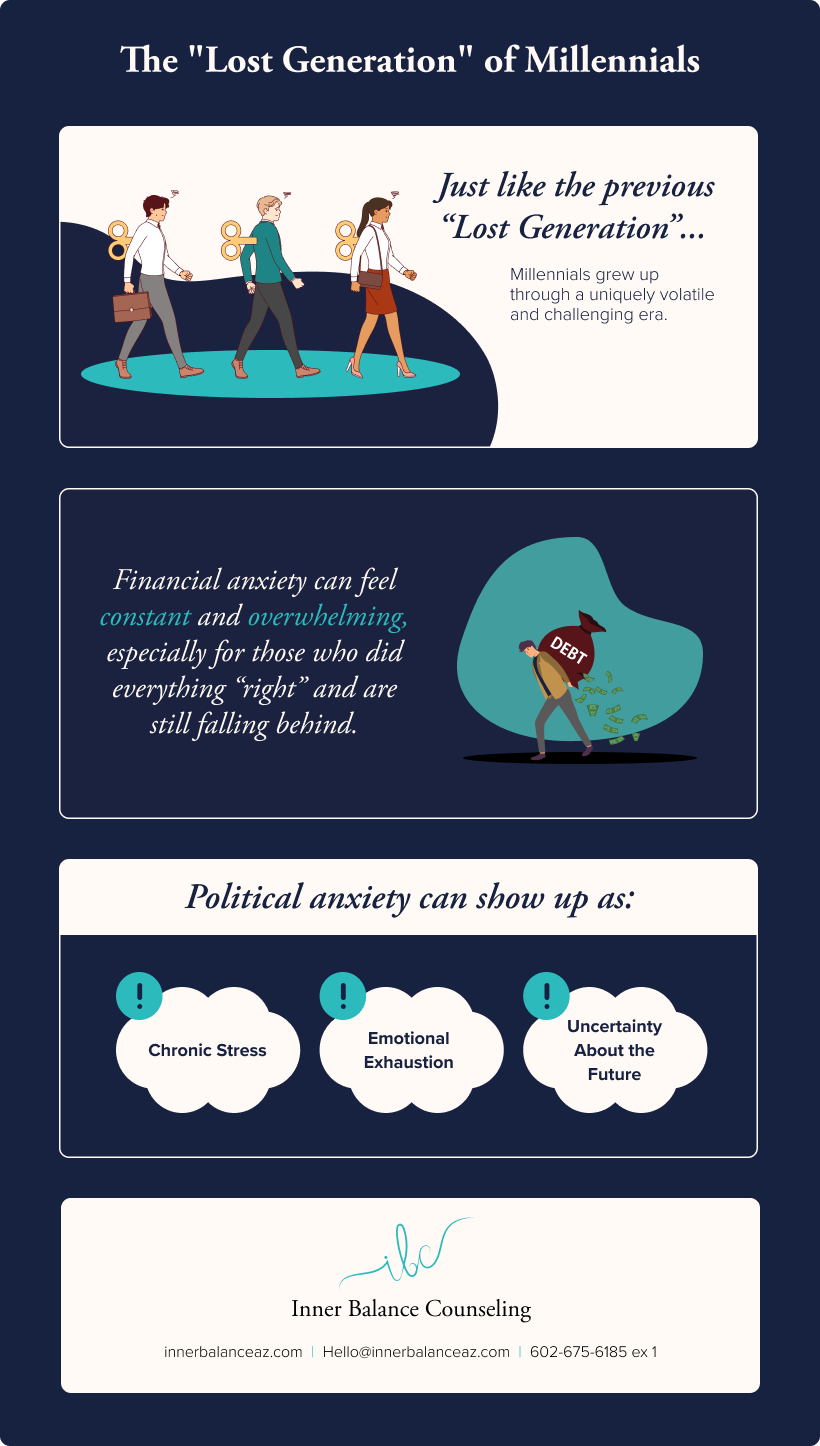
Without context, it’s easy to view millennials as overly dramatic or entitled. However, it’s important to understand that the state of society shapes the next generation, and just like the last “Lost Generation”, millennials grew up through a uniquely volatile and challenging era.
Millennials aren’t anxious and overwhelmed because life was handed to them and they don’t know what to do with it. The opposite is true, they put in the time and effort needed to achieve a stable life, only for the rug to be pulled out from under them by forces beyond their control.
Now, millennials must follow in the footsteps of the last “Lost Generation” by finding their own path forward through rapid change, uncertainty, and failing systems.
Related Guide: Panic Attacks
Growing up, millennials in the U.S. were taught the formula for achieving the American dream: get an education, work hard, and start climbing the ladder to success. This formula helped previous generations buy a home, start a family, and save up for retirement, all while being able to afford a relatively comfortable lifestyle.
After seeing how well this formula worked for their parents and grandparents, millennials followed suit and became the most educated and hardest-working generation to date. Once it finally came time to enter adulthood and enjoy the fruits of their labor, many millennials discovered that the same formula that benefited their parents had suddenly stopped working for them.
After earning a degree and working their way through entry-level roles, many millennials still weren’t able to settle down and afford a comfortable life. Instead, they were left with debt, a struggling economy, political turmoil, and no clear path forward.
Related Guide: Grief
Millennials aren’t buying houses for many reasons, and none of these reasons are because they don’t want to:
To make matters worse, millennials are also facing higher costs of living, rising inflation, and increased threats to job security, especially as companies shift towards less costly outsourced labor and artificial intelligence (AI).
All of these issues are hitting millennials at a particularly difficult period in their lives, and currently, they feel as if there’s no end in sight. Instead of getting married, buying a house, and starting a family, millennials are forced to put these important milestones on hold while they focus on making ends meet and navigating an uncertain economy.
These economic and financial issues only seem to be getting worse with time, and many millennials are left questioning when and if they will ever be able to buy a home or achieve financial stability. This creates a financial anxiety that can feel constant and overwhelming, especially for those who feel they’ve done everything “right” and are still falling behind.
Related Guide: What Is Burnout?
Political aggression and division have become so normalized that they’re part of our everyday lives. We see political polarization all the time on the news, social media, and in person, but just because it’s normalized, it doesn’t mean that it’s any less damaging.
Our country’s leaders are supposed to encourage cohesion, respect, and cooperation, both amongst themselves and the people they serve. The opposite has been true across the political landscape, and the growing trend of polarization has trickled down and led to tension, disrespect, and division in everyday life.
Over time, political polarization has drastically affected how we see ourselves, our communities, and our institutions, and not for the better. It’s had a particularly damaging impact on millennials, as they grew up with this political and societal shift and entered adulthood at its peak.
Now, in addition to facing the financial anxieties that come with trying to make it in today’s times, they also face a persistent sense of political anxiety. This anxiety can make it feel like there’s a constant target on their back, and it often shows up as chronic stress, emotional exhaustion, and a feeling of constant uncertainty about the future.
Related Guide: How to Use Social Media in a Healthy Way
The struggles millennials face don’t just affect their wallets and worldview. These struggles have also taken a heavy toll on their mental health, and research shows that millennials experience much higher rates of anxiety, depression, stress, and isolation.
On top of that, many millennials grew up in households or schools where conditions like ADHD, anxiety, or depression were misunderstood or minimized. Now that there’s much less stigma surrounding mental health and millennials are finally able to get the help they need as adults, there has been a noticeable increase in mental health awareness and diagnoses in recent years.
As millennials, it can seem like being misunderstood and having to navigate life on your own just comes with the territory. However, it’s important to understand that you are not alone — professional help is available to support you through life’s challenges and any mental health struggles you may have.
If you or a loved one could benefit from professional help and guidance, reach out to one of our team members here at Inner Balance. Our professional counselors and therapists are here to help you live the life you deserve.
Sign up with your email address to receive news and updates.

%201.svg)
With both in-person and online therapy options, we want to make therapy accessible and inclusive.
Your message will be sent directly to the therapist or counselor via email. Email is not fully secure during transit, so please avoid sharing sensitive information such as medical or insurance details. Your messages are also stored securely in our protected message center, accessible only to the professional you contact.
By using this form, you agree to our Privacy Policy and Terms, and consent to your message being sent and stored as described.
If this is an emergency do not use this form. Call 911 or your nearest hospital.
This site is protected by reCAPTCHA and the Google Privacy Policy and Terms of Service apply.