We're hiring! Visit our careers page to learn more!




Therapy is becoming a more typical thing for people to attend. It used to be reserved for people with “major mental health issues”, but now it’s more normalized for anyone to go to therapy.
It’s a great thing that therapy is becoming destigmatized. It makes more people feel comfortable about reaching out for help.
In this article, we’ll talk about how to tell if therapy is working and whether or not therapy will help.
When you start attending therapy, you may be wondering how you’ll know if it’s working.
Whether you’re just getting started on your therapy journey or have been attending for months, you’ll know that therapy is working by taking stock of any changes and examining yourself.
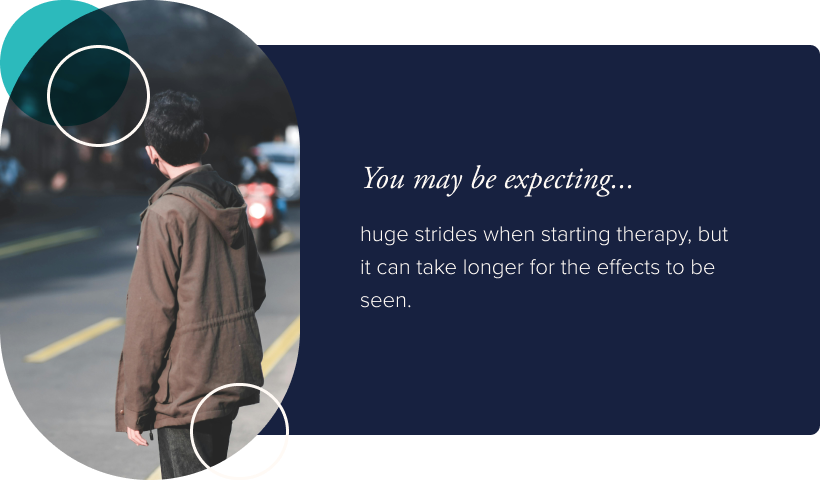
There’s no rule for how long it takes for therapy to work. It’s recommended that you stick with therapy for a while before choosing to end sessions. However, you shouldn’t continue if you feel unsafe.
Related Articles: How to Know if Therapy isn’t Working
If you’re new to therapy, it might be hard to know what to look for. Use the following signs to get a better understanding if therapy is working.
If you’re going to therapy, you’re probably going to find relief from specific symptoms.
Anxiety, depression, relationship issues, mood issues, and negative behavioral patterns are all reasons to attend therapy.
If you start experiencing fewer symptoms with lessened intensity, then therapy is likely working.
While in therapy, you’ll learn new coping, emotional regulation, and communication skills.
When you start using these skills, you’ll be better at:
If you find yourself using these skills outside of therapy sessions, then therapy is working.
Spiraling into negative thought patterns is a typical experience for many people. Some people can spiral and feel down for days, weeks, or months.
When attending therapy for a time, you should be better at bouncing back to your baseline after spiraling or having a bad day.
When you start seeing improvements from therapy, you may start to notice you feel more optimistic about the future.
This shift in perspective can help you embrace new opportunities and believe in your ability to overcome obstacles.

Your relationship with your therapist is important. They should be someone you feel you can trust.
When you feel supported by your therapist, you’ll feel more comfortable sharing your thoughts and feelings freely. That support is necessary for therapy to work.
If you feel supported and comfortable enough to be honest with your therapist, that means therapy could be working.
One thing therapy should do is teach you more about yourself. Because of that, you’ll be able to see yourself more clearly.
While in therapy, you’ll become more familiar with emotional and negative thought patterns. You’ll have a clearer understanding of what triggers you, how negative thoughts affect you, and what you feel comfortable with.
Understanding yourself better will help you work on whatever it is you’re attending therapy for.
Going to therapy can improve your relationships. This doesn’t mean every relationship you’re in will become easy.
You might find that some relationships are more harmful than not. You may get better at standing up for yourself, leading to more fighting, but fighting in a healthy way.
Therapy helps you learn skills to grow healthy relationships.
If you find yourself looking forward to going to your therapy sessions and doing the work, then therapy is likely working.
If therapy is working, you won’t want to stop. Sure, there will be hard sessions and moments of pushback, but overall, if you’re feeling good about therapy, it’s probably working.
When your mental health improves, your overall health, including physical health, will improve.
Stress, trauma, anxiety, and depression can all cause negative physical symptoms. As you begin to work through these issues and improve your mental health, your physical health should start to improve as well.
You may find that you have more energy and are able to focus more. However, not everyone will have major improvements, but improvements here and there are more typical.

If you’re going to therapy to address addiction, you should start to experience cravings less and less.
Relapses are a normal part of recovery. However, as you continue therapy, you may find yourself craving different things.
This includes those unhealthy habits that seem more like minor issues, like stress eating and staying up too late.
At Inner Balance, we strive to end the revolving door of people going in and out of treatment without any true change. In an industry that sees people as dollar signs, we see people.
Inner Balance Counseling offers people individualized counseling that actually helps people.
Find therapy options that are tailored to where you are at by requesting a consultation with Inner Balance.
Sign up with your email address to receive news and updates.

%201.svg)
With both in-person and online therapy options, we want to make therapy accessible and inclusive.
Your message will be sent directly to the therapist or counselor via email. Email is not fully secure during transit, so please avoid sharing sensitive information such as medical or insurance details. Your messages are also stored securely in our protected message center, accessible only to the professional you contact.
By using this form, you agree to our Privacy Policy and Terms, and consent to your message being sent and stored as described.
If this is an emergency do not use this form. Call 911 or your nearest hospital.
This site is protected by reCAPTCHA and the Google Privacy Policy and Terms of Service apply.