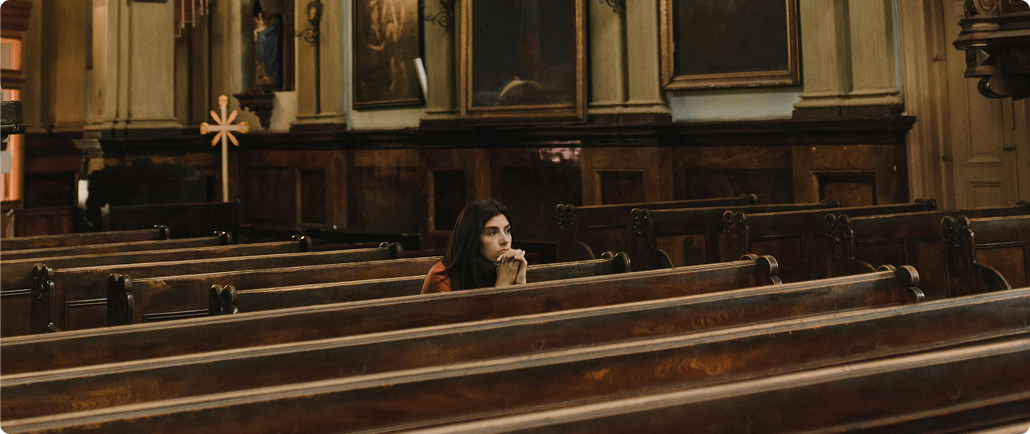
Religious trauma is a legitimate form of trauma, and it’s common in those who are going through a difficult transition away from their faith. Since religion is closely tied to someone’s family, community, and values, it can be extremely difficult for someone to navigate this form of trauma on their own.
In this guide, we’ll cover what religious trauma is, what it looks like, and how to heal from it.
What Is Religious Trauma?
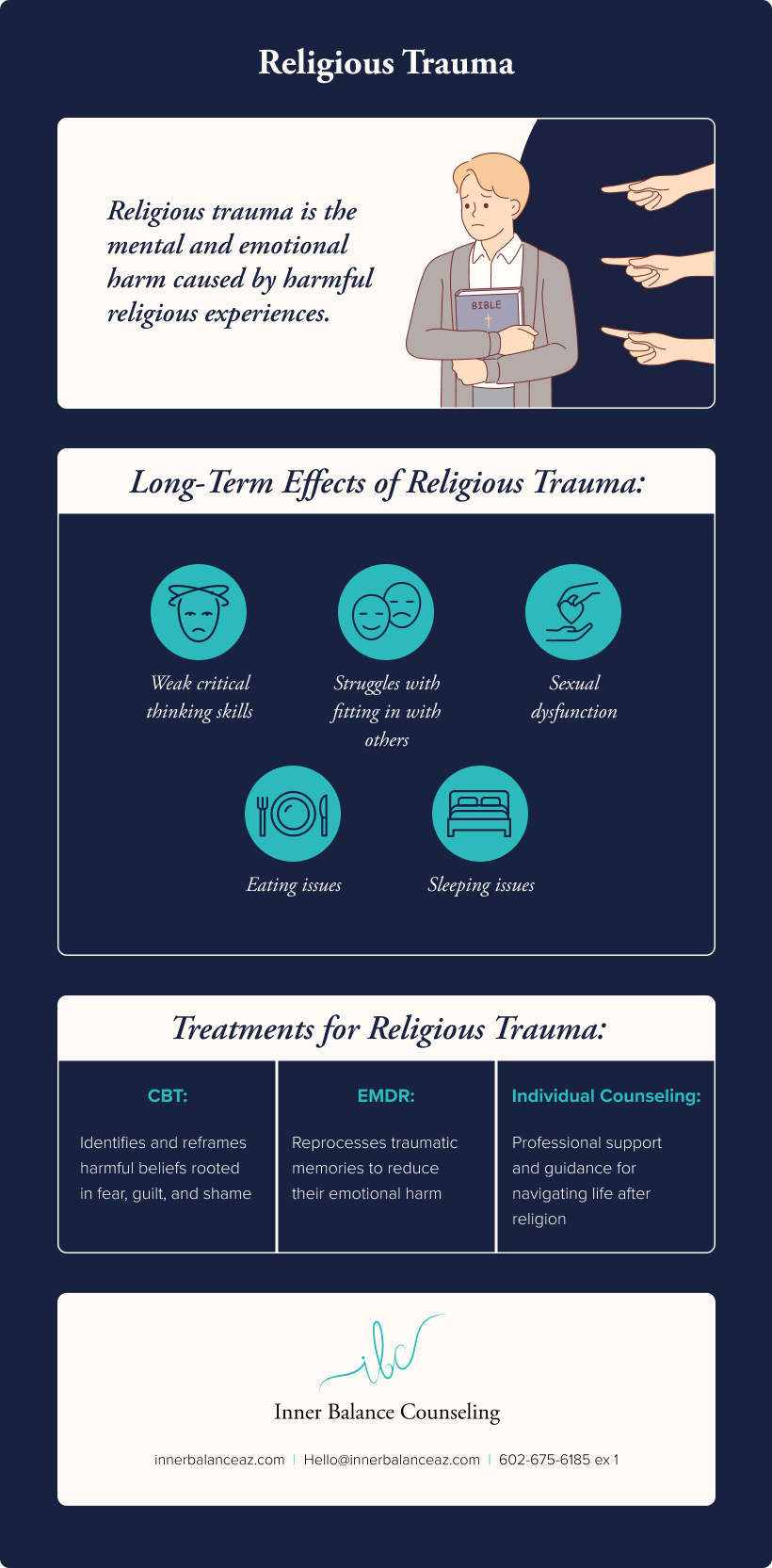
Religious trauma is the emotional and psychological damage that comes from harmful experiences with religion. It’s a very real condition that can affect anyone who feels controlled, threatened, or ashamed of themselves because of religious beliefs.
Not everyone experiences a particular religion in the same way. What may be transformative and enlightening to some can actually be harmful and traumatic to others. Even seemingly benign practices and beliefs can result in trauma if they conflict with a person’s identity, values, or emotional well-being.
What Causes Religious Trauma?
Religious trauma can come from any religious experience that results in emotional or psychological harm, including:
- Growing up in a very controlling or strict religious environment
- Being taught to feel constant fear, guilt, or shame
- Feeling pressure to follow the rules and not question beliefs
- Being discouraged from trusting your own thoughts or instincts
- Experiencing strict or harsh parenting based on religious beliefs
- Being cut off from outside perspectives or support
- Not having the freedom or opportunity to grow, explore, or make your own choices
For some people, leaving a religion can seem just as traumatic as staying in a harmful one. Religion offers answers to life’s biggest questions and gives people clear, black-and-white instructions on how to think and behave. It also offers a like-minded community that gives people a sense of belonging and purpose.
When someone leaves their religion, they not only have to overcome the fear of walking away from their old life, but they also have to suddenly find a new sense of identity, purpose, and belonging. This can be very isolating and traumatic, especially if they face major backlash from their family and community.
Related Guide: Intergenerational Trauma
Can Going to Church Cause Trauma?
Trauma is less about religion itself and more about how it’s experienced. For many people, going to church is an empowering experience that provides a sense of connection and meaning. It can be immensely beneficial under the right circumstances.
When beliefs are taught or enforced in ways that rely heavily in fear, shame, or control, it can make people feel like they can’t think for themselves or or make choices without fear of consequences. This is where the emotional harm comes from, and eventually, it can lead to religious trauma.
What Does Religious Trauma Look Like?
Religious trauma doesn’t always look the same from person to person. For some, it may be tied to specific religious experiences, while for others, it can show up in almost all areas of life.
In general, religious trauma impacts a person’s sense of identity, safety, and trust. They may struggle to make decisions on their own, feel anxious about doing something “wrong,” or experience ongoing guilt or shame that feels difficult to explain.
Even after stepping away from certain beliefs, the emotional patterns tied to them can take time to fully process and unlearn. People who come from intense, highly-controlling religious groups often have the hardest time navigating life after transitioning away from their faith, especially if they were raised in that religion instead of converting to it as an adult.
Signs of Religious Trauma
Here are some of the common signs of religious trauma:
- Persistent guilt, shame, or feelings of unworthiness
- Ongoing fear of punishment, judgment, or making the “wrong” choices
- Difficulty trusting your own thoughts, feelings, or instincts
- Anxiety, depression, or panic
- Struggles with identity, purpose, or sense of self
- Feeling isolated, disconnected, or struggling to form healthy boundaries
Religious trauma can also affect someone’s development, especially if they were deeply devout for a long time or grew up in a harmful religious group.
According to the National Institute of Health, this can lead to several long-term symptoms, such as weak critical thinking skills, struggles with fitting in with others, sleeping issues, eating issues, and sexual dysfunction.
Related Guide: Complex Trauma
Statistics of People with Religious Trauma
Studies estimate that approximately one-third (27‒33%) of the U.S. population has experienced religious trauma in their lifetime, and that one in five Americans, or 20%, may currently be experiencing it. Researchers note that these are conservative estimates, and the actual numbers are likely higher.
Collecting data on religious trauma can be challenging. People who are still in a harmful religious environment often have difficulty recognizing the emotional distress it has caused, or they may view it as a normal or necessary part of their belief system.
Even after leaving a harmful religious group, it can still be difficult to fully recognize the signs of religious trauma. Many people may also feel reluctant to share their experiences for fear of backlash or judgment.
As awareness of religious trauma continues to grow, it’s likely that more people will be able to recognize the signs and feel comfortable about speaking up.
How Is Religious Trauma Treated?
Treatments for religious trauma help people process their traumatic past and learn how to live life on their terms. It typically includes a combination of evidence-based approaches like CBT or EMDR, along with individual counseling that supports someone as they navigate their next chapter.
Religious Trauma Therapy
Cognitive behavioral therapy (CBT) helps people identify and challenge unhelpful thought patterns. It can be particularly helpful for people with religious trauma, as it helps them reframe the harmful beliefs that are rooted in fear, guilt, and shame.
When treating trauma, CBT is often paired with eye movement desensitization and reprocessing (EMDR). This is a specialized form of trauma therapy that helps the brain reprocess traumatic memories so they no longer feel as emotionally overwhelming.
Related Guide: Trauma-Informed Therapy
Individual Counseling for Religious Trauma
Individual counseling sessions are also an important part of treating religious trauma. In these sessions, clients are able to share the full complexities of their stories to better understand how they’ve been impacted by religious trauma.
Since religion can influence every area of someone’s life, healing from religious trauma is rarely an easy and straightforward process. However, with professional support and guidance, clients can learn how to repair these areas and begin living life in accordance with their own beliefs and values.
Inner Balance — Trauma-Informed Therapy and Counseling
At Inner Balance, our clients aren’t just numbers. They’re people we genuinely care about and are committed to helping receive the most effective trauma treatment possible.
Our trauma-informed approach ensures that each and every client gets personalized, compassionate, and effective treatment. We utilize not only different types of trauma-focused talk therapy, but also EMDR to resolve trauma and treat its symptoms.
Reach out today to connect with our team. We’d love to hear your story and support you in your next chapter.