We're hiring! Visit our careers page to learn more!




Keeping up with daily routines, social interactions, and professional or academic demands can be exhausting for anyone, but it takes a particularly heavy toll on people with autism.
The neurotypical world isn’t designed with autism in mind, and it often puts people with autism in a position where it’s up to them to close the gap. Navigating these everyday hurdles can lead many people with autism to experience a unique form of exhaustion known as autistic burnout.
In this guide, we’ll take a look at what autistic burnout is, why it happens, and how to recover from it.
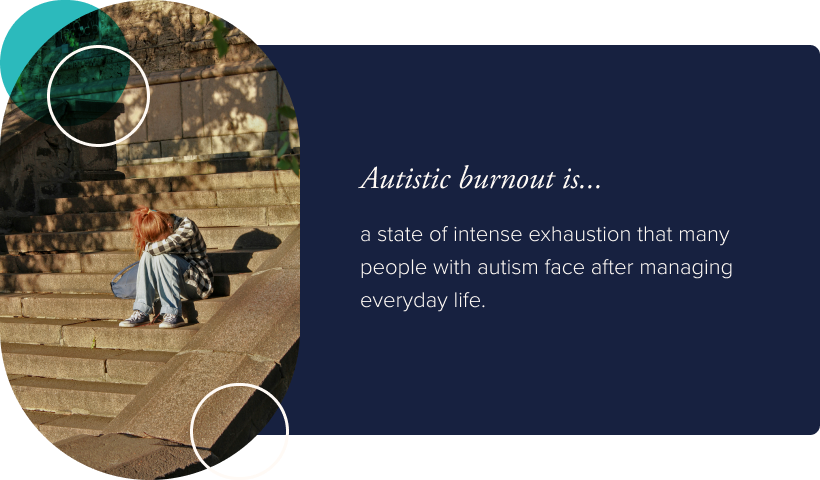
Autistic burnout is a state of intense exhaustion and overwhelm that many people with autism face after a long period of managing everyday life. It’s not a formal diagnosis, but it’s a well-documented and widely discussed experience amongst those with autism.
While autistic burnout can affect people in unique ways, here are some of the most common symptoms to look for:
Autistic burnout usually intensifies gradually, and it’s common to not notice any of these symptoms until someone reaches a point of extreme exhaustion. Unfortunately, as someone’s mental and physical health gradually suffers due to autistic burnout, so too does their personal, social, and professional or academic life.
Related Guide: Autism Spectrum Disorder (ASD)
If you have autism, then it’s likely that you’ve experienced autistic burnout at some point in your life. While it can occur at any time when it’s difficult to keep up with life’s demands, autistic burnout frequently occurs during life transitions, such as:
These major life changes can feel disruptive and exhausting for anyone, as it requires someone to adapt to a new routine and develop a new set of complex skills. Not only is this harder to do for people with autism, but it can be even more challenging because they may also have to manage sensory sensitivities, social differences, and executive functioning difficulties at the same time.
Neurotypical people and people with autism can experience burnout under similar circumstances, such as going through a life transition, keeping up with parenting or caregiving responsibilities, or feeling intense pressure from school or work. Over time, these circumstances can drain someone’s physical and mental energy to the point where they exert more energy than they recover, and this is what eventually leads to burnout.
However, people with autism face additional pressures to keep up and perform in a world that wasn’t built for them. To do this, they usually adopt masking behaviors to fit in socially and compensate for the ways their brains experience the world differently. This usually causes people with autism to reach burnout faster and feel it more intensely.
Related Article: Social Anxiety and Autism: How They're Related and How They Aren't
Both autistic burnout and depression can lead to fatigue, lowered mood, social isolation, and difficulties with handling daily responsibilities. These similarities can make it easy to misinterpret autistic burnout as depression, and to add to the confusion, it’s even possible to experience both at the same time.
Generally, if you have autism and the symptoms you’re experiencing are the result of keeping up with daily life, navigating social interactions, and masking, then it’s likely that you’re experiencing autistic burnout. If you feel persistent sadness, hopelessness, and loss of enjoyment in your usual interests, then you may be experiencing depression.
It can be difficult to figure out exactly what you’re going through on your own, so it’s always best to speak with a mental health professional for clarity, guidance, and support.
Paying attention to the specific stressors that cause autistic burnout can help you create strategies for preventing and recovering from it.
For example, is your burnout being caused by sensory overload, social interactions, or difficulties with executive functioning? If so, then you could try wearing noise-cancelling headphones, finding more opportunities to spend time alone, or using organizational tools like calendars and charts to keep track of important dates and finances.
The goal of these strategies is to reduce the amount of daily stress you’re under so that your body and mind has the chance to recover properly.
Related Article: Autism vs. OCD vs. ADHD
Getting support from a mental health professional is also a great way to learn how to prevent and recover from autistic burnout. They can help you identify the sources of your burnout, teach you how to manage them, and guide you in navigating daily life as a person with autism.
At Inner Balance, we provide therapy treatments and counseling services that can improve the quality of life for individuals with ASD. We use proven techniques and treatments that are personalized to the unique needs of each individual client.
If you or a loved one needs help managing ASD symptoms, reach out today to connect with one of our mental health experts.
Sign up with your email address to receive news and updates.

%201.svg)
With both in-person and online therapy options, we want to make therapy accessible and inclusive.
Your message will be sent directly to the therapist or counselor via email. Email is not fully secure during transit, so please avoid sharing sensitive information such as medical or insurance details. Your messages are also stored securely in our protected message center, accessible only to the professional you contact.
By using this form, you agree to our Privacy Policy and Terms, and consent to your message being sent and stored as described.
If this is an emergency do not use this form. Call 911 or your nearest hospital.
This site is protected by reCAPTCHA and the Google Privacy Policy and Terms of Service apply.