
When we’re faced with a difficult conversation or situation, it can seem like the easiest solution is to hide how we truly feel. This solution keeps the peace in the moment, but it only leads to more problems down the road.
Avoiding conflicts makes us feel safe temporarily, but it only leads to more anxiety, anger, and resentment in the long run. This can be a tough pattern to break, and many of us don’t understand why we do it in the first place.
In this guide, we’ll explore the reasons why people avoid conflicts and help you learn to be more confident during disagreements.
Why Am I So Conflict Averse?
Some people don’t mind interpersonal conflict because it gives them the chance to solve problems and share their thoughts. Others avoid conflicts altogether because they prefer to steer clear of tension and uncomfortable situations.
But where does conflict aversion come from? What motivates us to avoid interpersonal conflicts instead of facing them head-on?
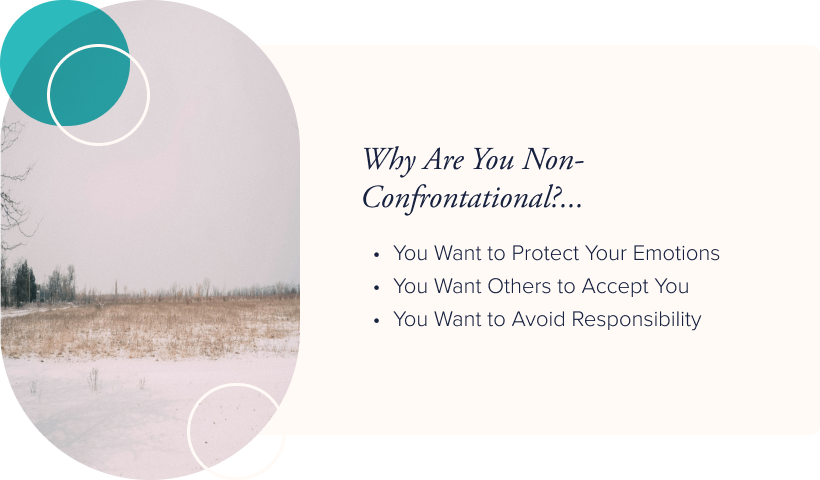
You Want to Protect Your Emotions
One reason you might avoid conflict is the fear that it will stir up strong emotions like anger, anxiety, or sadness in either yourself or the person you’re in conflict with.. You may even feel like it’s easier to let an issue slide than to face the challenging feelings that may come with addressing it.
This is common in those who are dealing with a volatile person or have dealt with volatile people in their past. They learned that protecting their inner peace is more important than addressing any interpersonal issues that they’re facing.
You Want Others to Accept You
You may also avoid confrontation if you’re worried that it will make others reject you or be upset with you. This worry usually causes people to become people pleasers—agreeing with others on the surface but hiding what they truly feel on the inside.
Some people become people pleasers to fit in with others and avoid rejection. Other people become people-pleasers because they struggle with social anxiety and worry that speaking up would make others judge them or dislike them.
Related Article: Social Anxiety
You Want to Avoid Responsibility
Sometimes, you may be avoiding confrontation because you want to control a situation or protect your reputation. Some examples of this include:
- Blaming others instead of owning up to your mistakes
- Ghosting people rather than working through an issue
- Withholding information to prevent conflict or judgment
- Pretending everything is fine instead of admitting a problem exists
- Avoiding difficult conversations to maintain a certain image
People who avoid conflict in this way often prioritize their own comfort over honesty and accountability. In the long run, avoiding conflict to protect yourself usually creates bigger problems than it solves.
Related article: Blaming Others When Things Go Wrong
How Do I Stop Being Non-Confrontational?
The first step in overcoming conflict avoidance is recognizing that it’s harmful to you and those around you. You owe it to yourself and others to show up as your authentic self and address problems head-on, rather than concealing how you truly feel and letting problems persist.
To help you learn how to stop being non-confrontational, here are some practical strategies for handling conflicts with confidence.
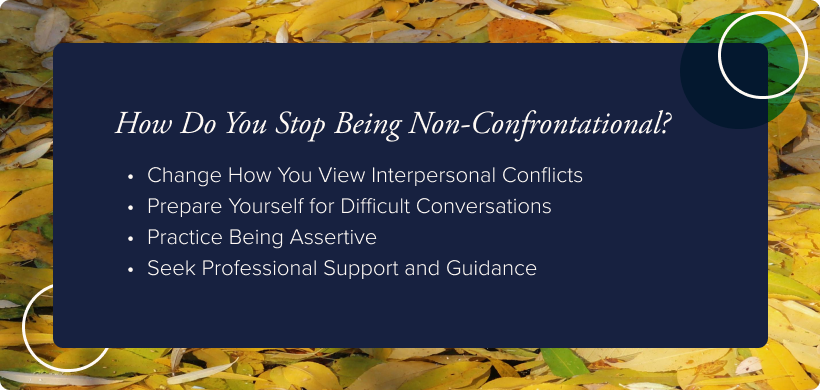
Change How You View Interpersonal Conflicts
Many people who struggle with being non-confrontational view conflicts as fights. This perspective raises negative emotions and makes it harder to achieve a productive outcome.
The purpose of confrontation is to achieve mutual understanding, not to attack or blame others. By viewing conflicts as a way to help everyone involved, you can approach tough conversations more calmly and make sure your voice is truly heard.
Prepare Yourself for Difficult Conversations
If your emotions are running high and you don’t feel like you can have a productive conversation, it’s okay to give yourself some time to prepare. You should always try to address an issue as quickly as possible, but make sure you’re calm enough to communicate clearly and respectfully.
To prepare for a difficult conversation, think about what you want to say and how you want the conversation to go. If you want a calm, productive conversation, make sure you present your side of the story in a neutral way. Avoid placing blame, listen to their side of the story, and work together on a solution.

Practice Being Assertive
If you struggle with letting others know how you really feel, then you can practice being assertive in minor situations until you can communicate directly on more important issues.
Here are some small ways that you can practice being assertive:
- Speak up when making plans with other people
- Gently correct someone when they get something wrong about you
- Ask for help when you have too much on your plate
- Ask for clarification when you don’t understand something
- Share your ideas at work, school, or group settings
- Share your opinions in casual conversations
This will gradually build your confidence and help you understand that your opinion matters.
With time and practice, you’ll be able to express yourself clearly in more important or challenging situations.

Related Article: Low Self-Esteem
Seek Professional Support and Guidance
Getting support from a mental health professional can help you feel more confident when dealing with conflicts. They can help you understand if your conflict aversion comes from a deeper mental health issue and teach you how to handle disagreements in a healthier, more constructive way.
Related Article: Trauma-Informed Counseling
Find Your Voice
At Inner Balance, our counselors are committed to helping you live life on your own terms. Your voice and opinion matter, and we want to help you feel heard, set boundaries, and take control of your own path.
Reach out today to connect with one of our mental health professionals and learn how we can help you live the life you deserve.