
Inner Balance Counseling provides support for high-functioning autism, autistic adults, and teens navigating relationships, communication, anxiety, emotional regulation, identity, and everyday life challenges.
Many people with autism are highly intelligent, insightful, and capable, but may struggle with social communication, sensory sensitivity, burnout, masking, routines, or feeling misunderstood by others.
Our counseling approach focuses on individuals seeking emotional support, coping tools, self-understanding, and improved quality of life.
Autism spectrum disorder (ASD) is a developmental disorder that impairs someone’s ability to communicate and interact with the world around them. Individuals with ASD will typically have highly specific and seemingly obsessive interests, and they’re also prone to exhibiting repetitive behaviors. ASD is a lifelong condition that affects people at varying degrees of severity.
Those with ASD are commonly considered to be neurodivergent. Neurodivergence is a non-medical term that refers to people with brains that process information differently from neurotypical brains. Although this is an oversimplification, it has helped shed a positive light on individuals that think and behave differently from others. Neurodivergence can be used to describe those with ADHD, anxiety, and even disorders like dyslexia.
Read our related article for more information on what it means to be neurodivergent.
Previously, individuals with autism were diagnosed with distinct autism disorders. These disorders were determined by the severity of someone’s symptoms, and they included:
The current model of autism places individuals on a spectrum, and they are all diagnosed with ASD. Autism exists on a spectrum, meaning autistic experiences can vary widely from person to person. Some autistic individuals live independently, maintain careers, attend school, and seek counseling support for challenges related to communication, anxiety, relationships, sensory processing, executive functioning, or burnout.
Autism impairs someone’s ability to communicate and adjust to social situations. Some of the common signs of ASD in a person can be seen during social interactions, and these signs include:
Even those with mild ASD symptoms can find social interactions to be challenging, so they often appear to be living in their own world. Individuals with severe ASD symptoms can be completely nonverbal or unable to communicate at all.
Children and adults with ASD will often perform repetitive behaviors that are used to self-stimulate. This is commonly called stimming. They will also gravitate towards specific topics and objects, and these are referred to as limited interests.
Some of the common repetitive behaviors and limited interests include:
Those with mild ASD symptoms will usually experience fewer behavior disturbances as they age. Individuals with severe ASD symptoms can experience intense behavior patterns that persist throughout their lifetimes.
According to recent studies, 1 in 36 children in the U.S. have ASD. Certain demographics, like gender, can make someone more likely to have ASD. In fact, boys are four times more likely to have autism than girls are. Although children are more likely to be diagnosed with ASD, some individuals don’t receive a diagnosis until adulthood.
Many adults with autism go undiagnosed for years, especially individuals who learned to mask their symptoms or whose challenges were mistaken for anxiety, ADHD, introversion, perfectionism, or social awkwardness.
High-functioning autistic adults may struggle with:
Therapy can help autistic adults build self-understanding, develop coping strategies, improve communication skills, and navigate life in a way that honors their neurodivergent strengths and needs.
It is common for someone with ASD to suffer from a variety of mental health disorders. Some of the comorbidities of ASD include:
ASD can often be mistaken for other disorders, such as attention-deficit/hyperactivity disorder (ADHD). ADHD and ASD share common symptoms, such as difficulty focusing, repetitive behaviors, and social awkwardness. It’s common for someone to be diagnosed with ADHD as a child, and then be re-diagnosed with autism as an adult.
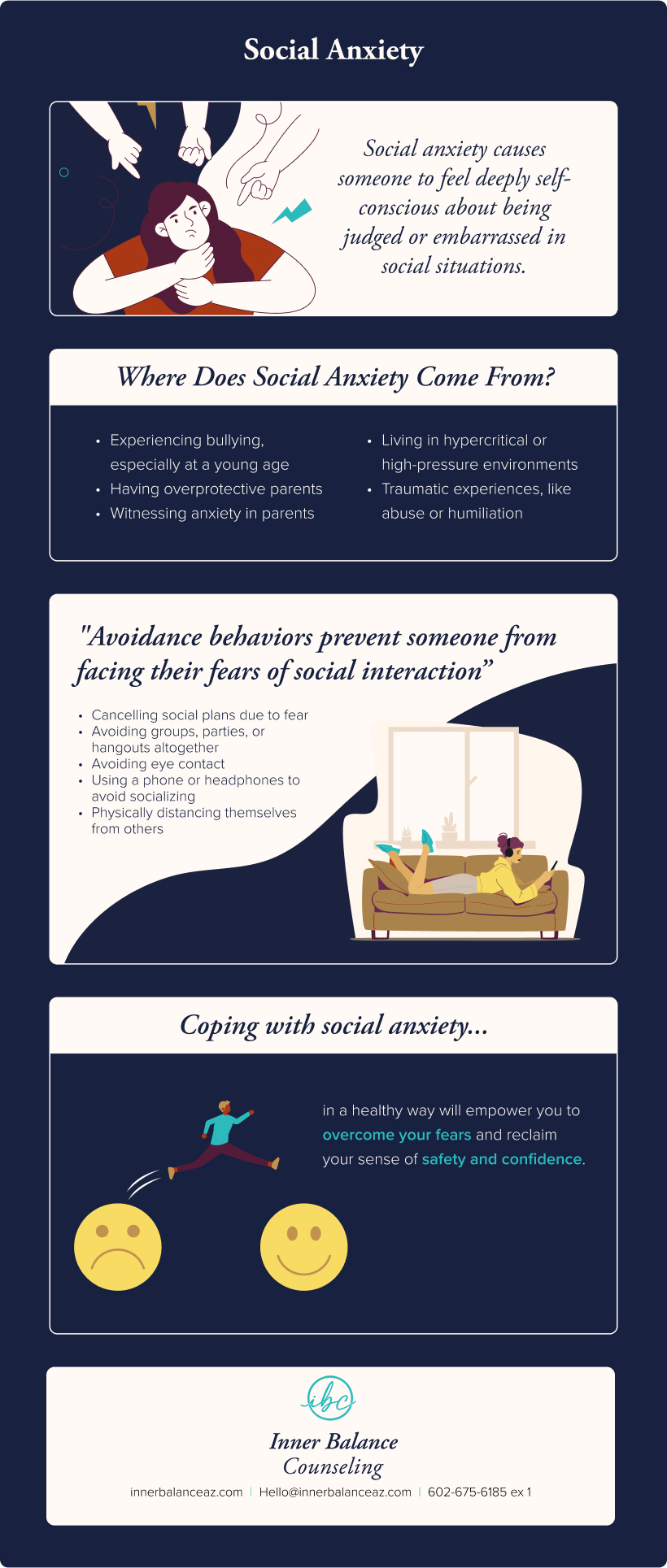
Read our related article to discover how social anxiety relates to autism spectrum disorder.
There are various environmental and genetic factors that can be linked to ASD. These factors directly impact brain development, which can eventually lead to the presence of autism.
Environmental factors like low birth weight and extreme prematurity are known to influence brain development. Specific autism-risk genes can affect neuron activity, which can also impair the development of certain regions in the brain.
Autism is hereditary, and most children with autism inherited an autism-risk genome from their parents. In fact, multiple studies have proven that up to 90% of the risk for autism comes from your genome. Your genome is the DNA that you inherit from your parents, and it is responsible for how your brain and body develops.
Despite what you may have heard, vaccines do not cause autism. This is a myth that may stem from the diagnosis of autism around the same time that a child receives vaccines. Multiple scientific studies involving millions of children have proven that there is no relation between vaccines and the development of ASD.
The only way to determine if someone has ASD is with a formal diagnosis from a medical professional. A qualified medical professional will perform a series of assessments to identify signs and symptoms of autism. These professional assessments typically include:
While there can be signs of ASD in children less than a year old, specialists can reliably determine if a child has autism by age 2. Most children, however, receive a diagnosis around age 5.
Unfortunately, the rise in popularity of social media platforms like TikTok has led to widespread misinformation regarding ASD and its symptoms. Although the normalization of neurodivergent individuals is a positive outcome of social media, it has led to misinformed individuals self-diagnosing themselves with autism.
If someone believes they may have autism, it is imperative that they consult a licensed professional. Online information is often incomplete or inaccurate, and it can’t be used to provide a diagnosis.
Read our related article for more information on the dangers of self-diagnosing with online information.
Specific therapies and interventions are used to mitigate the symptoms of ASD. The severity of someone’s ASD symptoms determine which treatment practices are most effective for them. Some of the common therapies and interventions for ASD include:
Individuals with ASD can also benefit from social skills training or speech-language therapy. The goals of these treatments are to reduce symptoms and teach positive life skills. Specific treatments target the unique needs of the individual, rather than treating ASD as a whole.
Our counseling services primarily support high-functioning autistic teens and adults seeking therapy for emotional wellness, social challenges, anxiety, relationships, identity, and neurodivergent life experiences. We do not provide intensive behavioral treatment, ABA services, or care for severe autism requiring higher levels of daily support.
ASD is a neurological condition that can’t be cured. However, someone with ASD can drastically improve their quality of life with the appropriate treatments. Although it’s best to receive professional help early in life, it’s never too late for someone with ASD to get the help they need.

At Inner Balance, we provide therapy treatments and counseling services that can improve the quality of life for individuals with ASD. We use proven techniques and treatments that are personalized to the unique needs of each individual client.
If you or a loved one needs help managing ASD symptoms, consider reaching out to one of our mental health experts today.
Check Your
Insurance Coverage
Testimonials

“The staff at Inner Balance Counseling is very professional and supportive. They guided me to Jennifer Rizzo. I’m very glad that they did. Jennifer is professional, caring, and always knew what to do and say. Jennifer is also very accommodating to my needs and schedule. I highly recommend Jennifer and Inner Balance Counseling.”
-Richard L.
Meet Our Providers

YOUR PAST DOESN’T DEFINE YOUR FUTURE
There’s never been a better time to begin. Our trauma-informed therapists are ready to support you.